Available in🇮🇳 India
In India, recurring payments were restrictive in the past because of the RBI’s requirement for a two-step verification process where the customer required to enter a One-Time Password (OTP), received via email or SMS, to complete the payment. In recent times, due to the relaxation of this requirement, you can define the interval in which you can charge customers automatically.
Tokenisation for Card based Recurring Payments
Tokenisation for Card based Recurring Payments
To process recurring mandates, customer card details must be secured/tokenised in accordance with applicable laws. Razorpay Checkout explicitly collects customer consent for tokenising the card to process e-mandate/recurring transactions.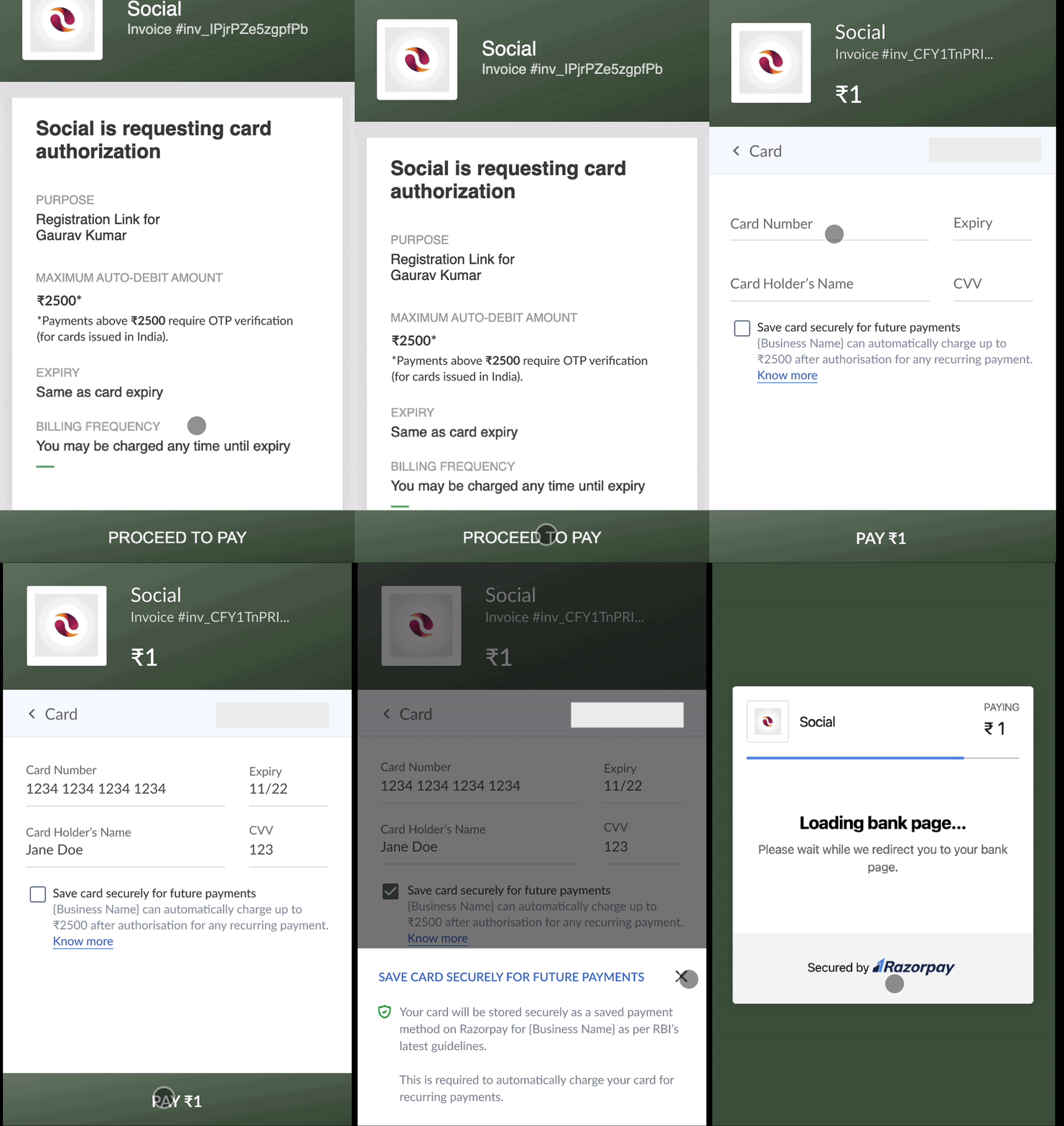
1. Register Card Mandate
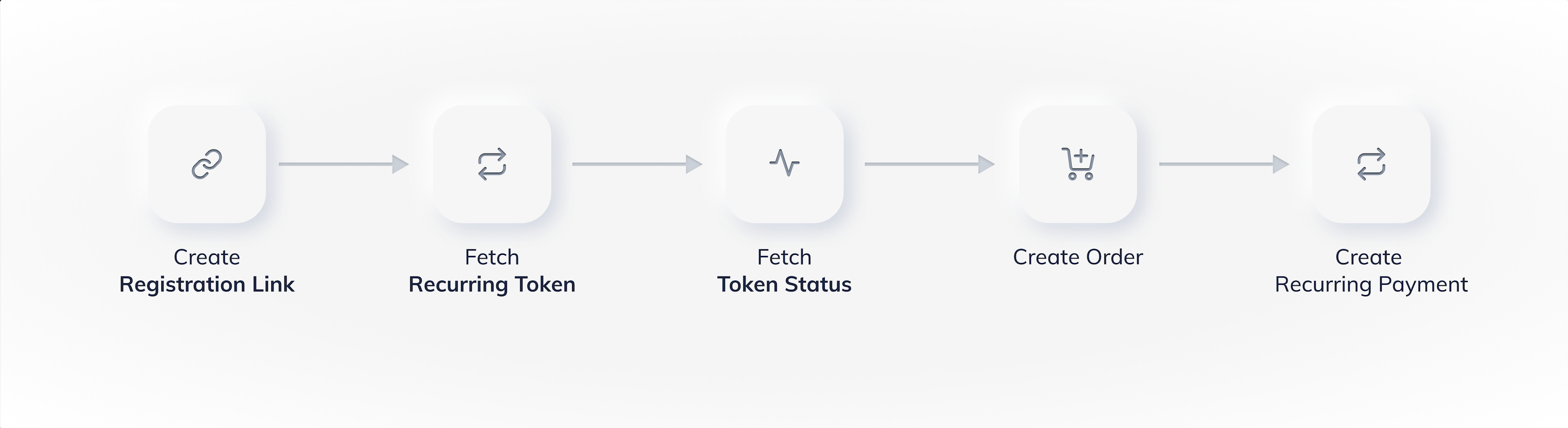
Mandate registration is a process of creating a payment checkout form for customers to make Authorisation Transaction and register their card mandate. A token will be generated once a customer makes this transaction. Using this authorisation transaction, we can authenticate the customer’s card mandate and ensure that we can charge them recurring payments. The authorisation transaction can be created using the following methods:- Using Razorpay Standard Checkout
- Using a Registration Link
Following is the authorisation transaction flow for Razorpay Standard Checkout method.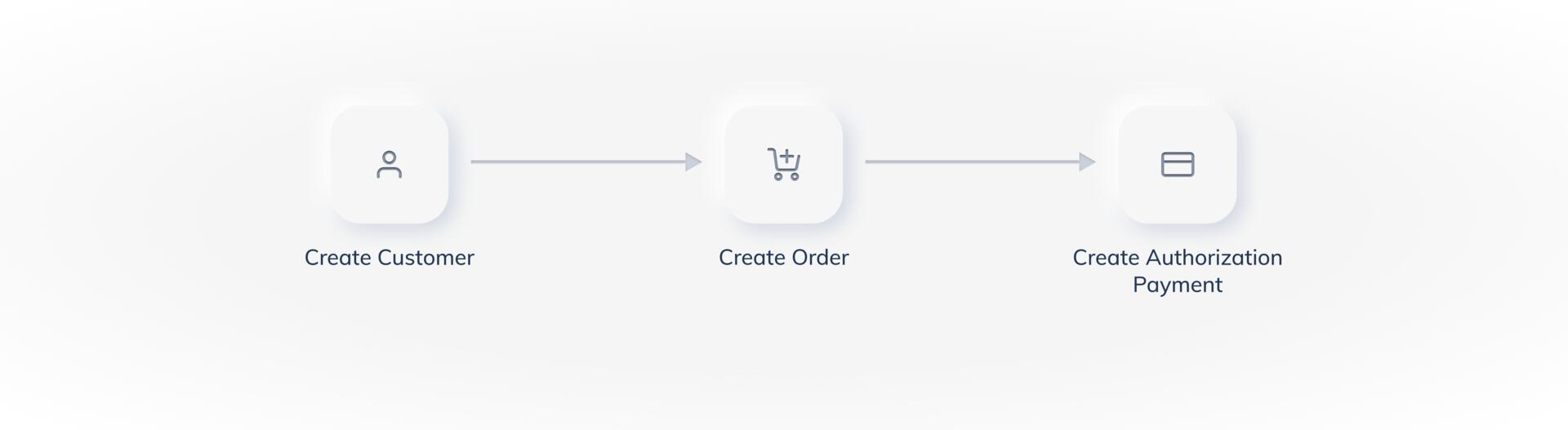 To create checkout form for customers to complete authorisation transaction using the Razorpay Standard Checkout method:
To create checkout form for customers to complete authorisation transaction using the Razorpay Standard Checkout method:- Create a customer
This returns acustomer_id. - Create an order
This returns anorder_id. The order must be created for: - Create authorisation transaction
Pass thecustomer_id,order_idand a few additional parameters in your checkout to create the authorisation payment. The customer completes the authorisation payment, which generates atoken.
2. Fetch Card Mandate Registration Details
This is a process of fetching the token that contains the registration details of the customer and checking its status. A token represents a mandate registration and is generated after the authorisation transaction is successfully captured. A token contains customer’s payment details stored by Razorpay and is used to create a recurring payment.Handy TipsFor simplicity, tokens are considered to be mandates. Hence, the status of the token determines the status of the mandate registration.
Token Statuses
Token Statuses
As the authorisation transaction moves through its different states, the token that is generated also undergoes state changes. Following is the life cycle of a token: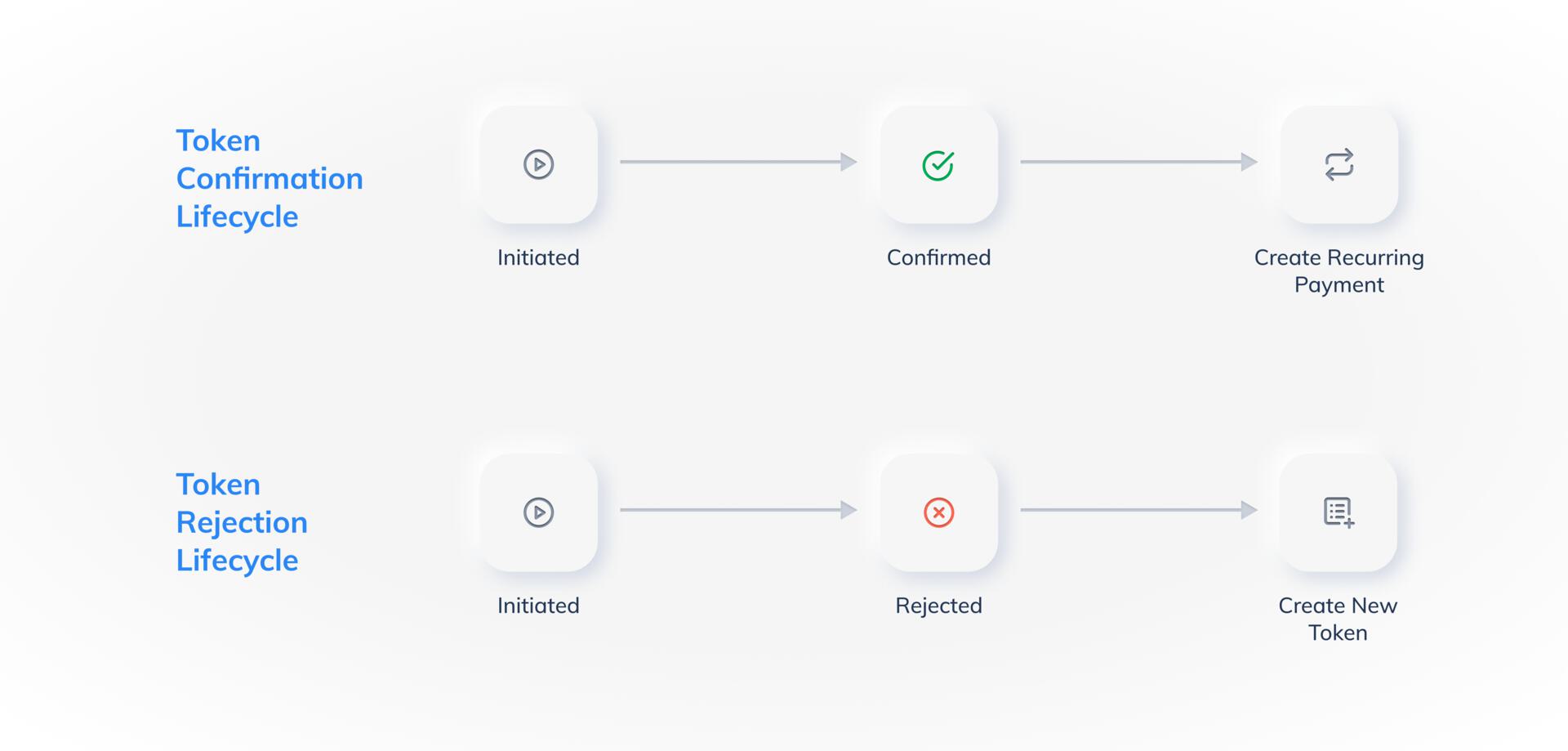
Know more about the turnaround time (TAT) for cards from the FAQs.
3. Charge Customers
This is the process of charging customers the actual subsequent amount using the fetched token and customer details.Handy Tips
- Subsequent payments can be charged without the need of any intervention from the customer. However, subsequent payments need to be created manually by you.
- Once a token goes to the confirmed state, you can start creating recurring payments for the customer as per your business requirements.
- Using Dashboard
- Using APIs
To create subsequent payments using the Dashboard:
- Search for the token and check its status
After the authorisation transaction is complete, a token is generated. You can use the search feature on the Dashboard to find the required token and check its status. - Charge the token
After you have found the required confirmed token, you can create a subsequent payment by charging the token according to your business needs.
Order is Created AutomaticallyWhile creating a subsequent charge using the Dashboard, Razorpay automatically creates an order for you when you charge a token. There is no need to create an order separately.