

Available in🇮🇳 India
As a platform with a multi-party business model, you can charge a fee for your platform or any third parties involved. Your sub-merchants may or may not have multiple third-parties involved for their processes. The money movement differs based on the number of parties involved. Control of Funds enables the sub-merchant to seamlessly disburse money, per order, with reports, avoiding the hassle and confusion with settlements. The examples explain the money movement in the presence and absence of a third-party.
Example #1
Example #1
Assume the following:
- AcmeShop is a marketplace for clothes. - Razorpay Technology Partner
- Rani Wear is one of the many sellers on AcmeShop. - Sub-Merchant
- Deldel is a delivery service. - Third-party Service
- Gauri Kumari is a buyer.
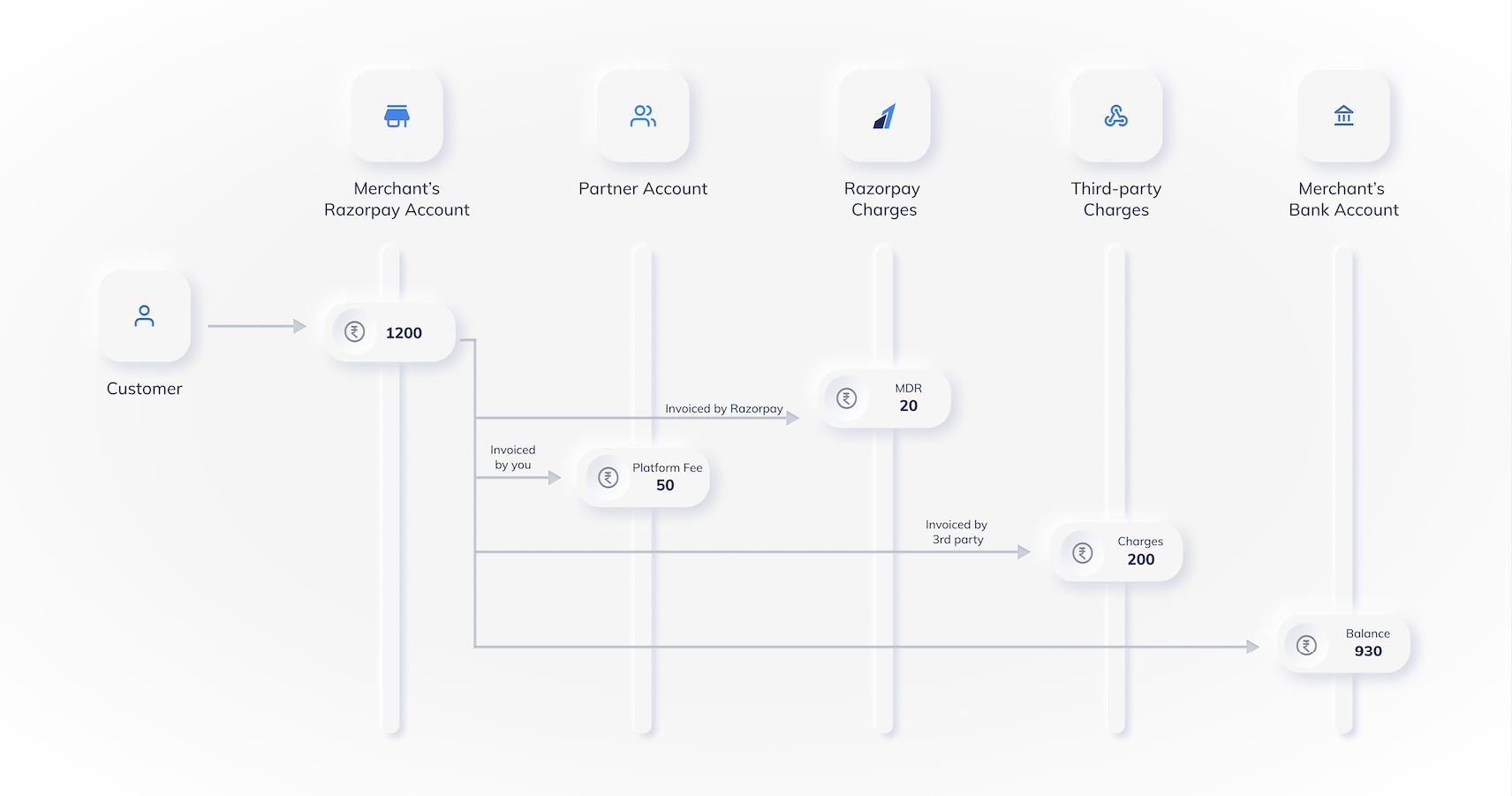
- Gauri buys a scarf from AcmeShop. She pays a sum of ₹ 1200 for her order.
- The payment is processed and accepted by Rani Wear’s Razorpay account and then the sum is divided and credited to the following:
- AcmeShop Fee = ₹ 50
- Delivery Fee for Deldel = ₹ 200
- Razorpay Charges = ₹ 20
- Rani Wear Bank Account = ₹ 930
Example #2
Example #2
Assume the following:
- AcmeBook is an accounting platform that enables payment acceptance. - Razorpay Technology Partner
- Mulchand Kirana is one of the users on AcmeBook. - Sub-Merchant
- Gauri Kumari is a buyer.
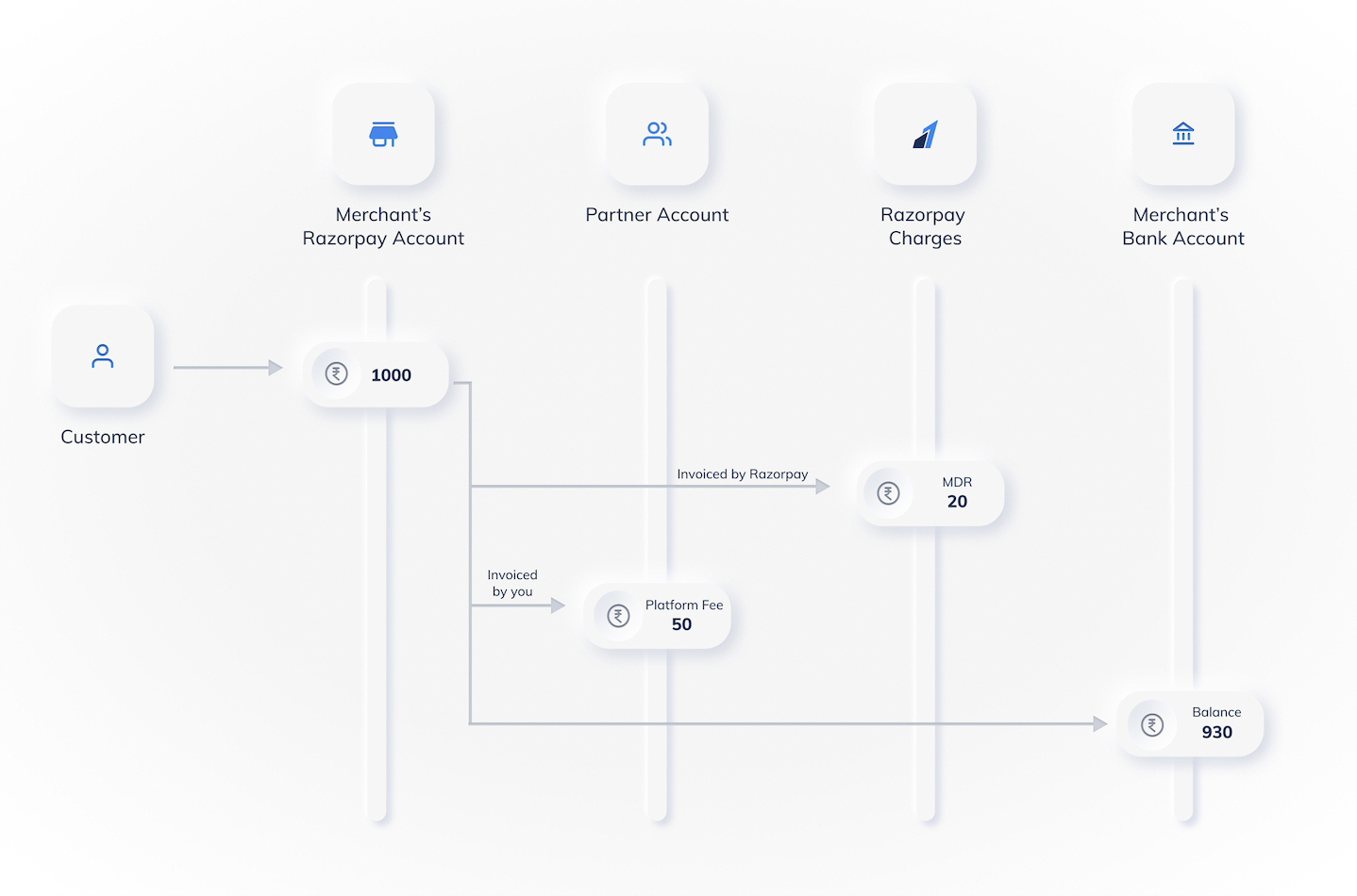
- Gauri buys some kitchen groceries from Mulchand Kirana. She pays a sum of ₹ 1000 for her order.
- The payment is processed and accepted by Mulchand Kirana’s Razorpay account and then the sum is divided and credited to the following:
- AcmeBook Fee = ₹ 50
- Razorpay Charges = ₹ 20
- Mulchand Kirana Bank Account = ₹ 930
Use Cases
Below are some of the most common use cases for control of funds with embedded payments.Education
Education
AcmeVidya is an e-learning platform that offers certifications and diplomas to students and working professionals. It hosts a range of courses provided by different institutions and instructors.
- AcmeVidya becomes Razorpay’s Technology partner.
- The instructors and institutes are added as sub-merchants.
Hospitality & Travel
Hospitality & Travel
AcmeTrips is a air-tickets and hotel booking platform. It lists the best offers along with other amenities provided by hotels and airlines.
- AcmeTrips becomes Razorpay’s Technology partner.
- The airlines and hotel groups are added as sub-merchants.
- Other vendors, like outsourcing cab service - are third-parties.
Prerequisites
To support the money movement flow:- Get the
platforms_marketplacestag enabled on your Partner account through your sales point of contact. - If you are charging a Platform fee, create a Linked Account for your merchant account and add your bank account details.
- Create a Linked Account for your third-party service providers, if any (for example, logistics partners). Add their bank account details.