

Available in🇮🇳 India
Payroll provides comprehensive solutions for managing Cost to Company (CTC) components and various compensation elements. The system enables organisations to structure employee compensation effectively while ensuring compliance with statutory requirements and maintaining transparency in salary administration.
Features
Features
Accessing Employee Compensation
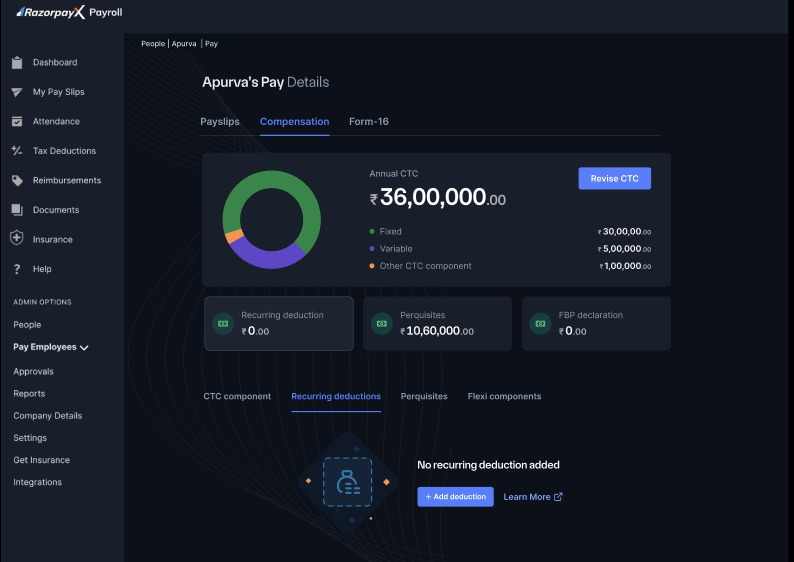
Navigate to People → Employee’s Name → Pay to access an employee’s compensation details. The compensation dashboard displays a complete overview of the employee’s pay structure.Compensation Overview
The main compensation screen presents:- Annual CTC - Total cost to company displayed prominently (₹36,00,000 in the example).
- Visual Breakdown - Pie chart showing the distribution between fixed, variable and other CTC components.
- Key Metrics:
- Recurring deduction amount
- Perquisites value
- Flexi components allocation
Compensation Components
CTC Components
Manage all salary elements including fixed, variable and other CTC components that form the total compensation package. Configure basic salary, allowances, bonuses and employer contributions.
Special Allowance
Understand why Special Allowance shows a negative value, how employer PF and ESI fit into the CTC, and how to fix a salary structure so payroll finalisation is not skipped.
Recurring Deductions
Configure and track regular salary deductions such as loan EMIs, insurance premiums and facility charges. Set up automated deduction periods with proper audit trails.
Perquisites
Manage non-monetary benefits and their tax valuation including company cars, accommodation, stock options and other fringe benefits as per Income Tax regulations.
Flexi Benefits
Allow employees to choose eligible benefit components within defined limits, improving tax efficiency while keeping compensation aligned with policy.
NoteAll compensation changes take effect from the next payroll cycle. Historical records remain unchanged for audit and compliance purposes. Ensure proper authorisation before making any compensation modifications.